What Is Islamic Calligraphy and Why It Matters
By Mir Hyder Abidi ·
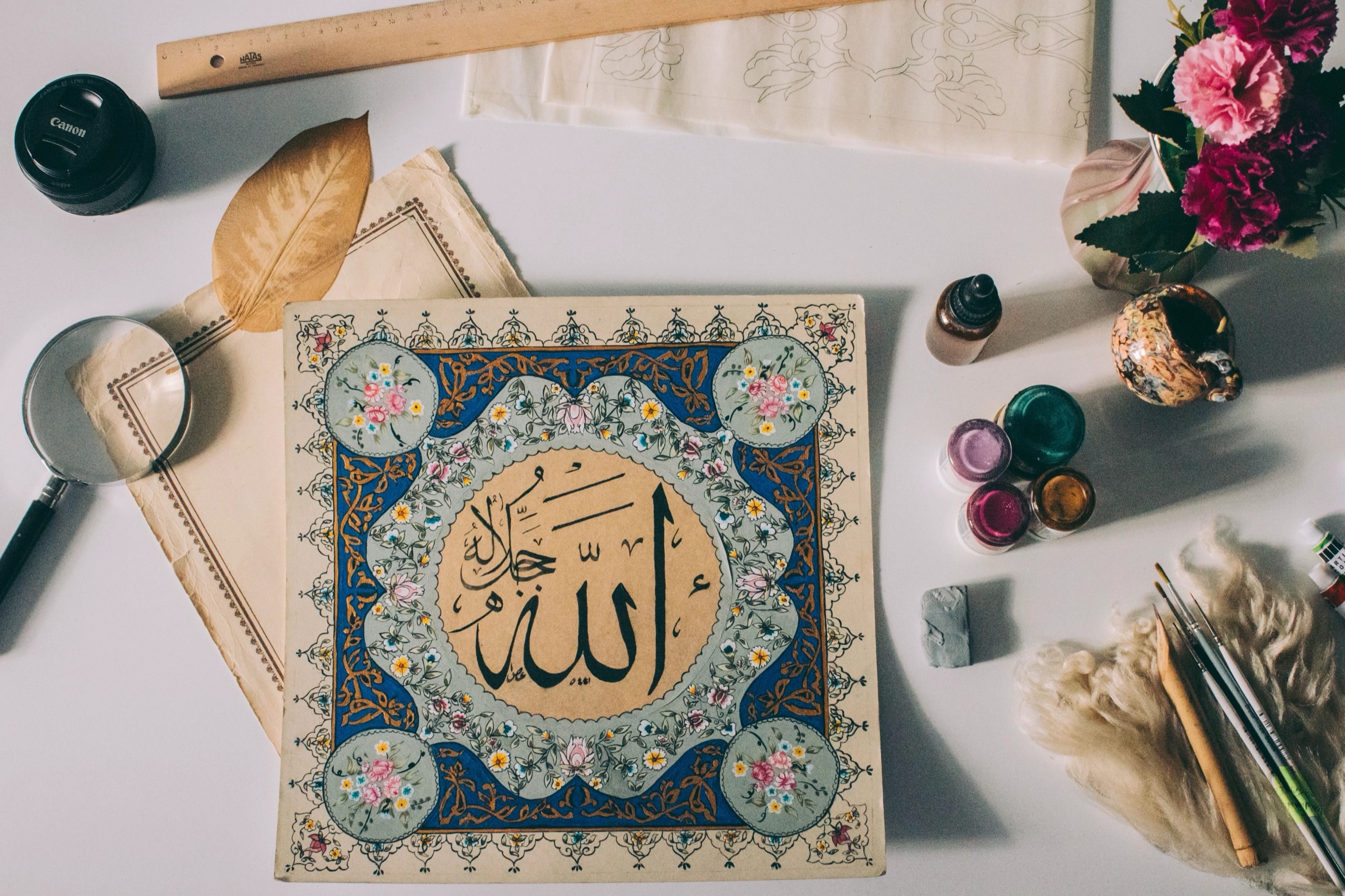
Islamic calligraphy is the art of writing Arabic script with skill and care, and it has been practiced for more than a thousand years. Its most important work has been copying the Qur'an and honoring sacred words, such as the name of God and the name of the Prophet Muhammad, peace be upon him and his family. Because Arabic letters change shape and connect, scribes shaped them into one of the great art forms of the Muslim world, seen on mosques, books, tiles and homes.
Writing as an Act of Devotion
For many centuries, the people who copied the Qur'an by hand trained for years. They wrote slowly, checked each letter and treated the page as sacred. Some copies took many months to finish, and the work was done with patience at every line.
Many Muslims still see calligraphy this way. A beautifully written name is a way of honoring the word it carries.
Calligraphy is also a teaching tool. A child who learns to copy a name slowly, stroke by stroke, learns to look closely at letters and to respect the words they make.
Why Arabic Lends Itself to Art
Arabic letters take different forms depending on where they sit in a word. They connect, stretch and curve. That flexibility gave calligraphers a wide range of shapes to work with.
A skilled calligrapher balances the spacing, the thickness of each stroke and the height of the letters, so that the whole line reads as one clear shape. Many calligraphers practice simple letters for years before they attempt a full inscription. The pen, the ink and the paper each shape the final line, so the craft is as much about preparation as about the hand.
How a Calligrapher Learns
Training usually starts with the basic strokes, not with whole words. A student practices straight lines, curves and dots until the hand is steady. Only then does the student move to single letters, then short words, then lines of text. Teachers often ask students to copy a model many times before they change anything, because the eye learns proportion through repetition.
- Straight and curved strokes, repeated until they are even
- Single letters copied in one style until their shapes match
- Short words checked against a model, line by line
- Original compositions only after years of steady practice
Where You Will See It
Islamic calligraphy appears in many places:
- Qur'an manuscripts and printed copies
- Mosque walls, domes, arches and inscription bands
- Tiles, ceramics, metalwork and woodwork
- Books, certificates and family documents
- Framed art in homes
What Calligraphy Is Used For
Calligraphy is not only for the Qur'an. It is used for names, short phrases, blessings and poetry. A name of God on a living room wall, or a short phrase over a door, is a daily reminder. For a family, a piece on the wall also says something about what the household values, and guests often ask about it, which opens a conversation.
Many families choose calligraphy because the words stay clear even when the letters are beautiful. A reader can see what it says.
A short name or a single word is often the best first piece. It is easier to read from across a room and easier to teach from.
What to Look for in a Good Piece
A good piece is easy to read, with even spacing and clean edges. It should also tell you what it says. Pieces that pair the Arabic with an English label help children, new Muslims and guests recognize the words. Good light also helps, because a piece that catches light across its letters shows their shape clearly, while a dark corner hides the detail. Ask who made the piece and what the words say. A seller who answers these questions clearly usually cares about the work.
Calligraphy also works well on small objects. A sticker, a card or a bookmark can carry a name in gold, and the same care that goes into a framed piece goes into the letters. Keep the design simple, so the words stay the focus and a reader can take them in without effort.
Size matters too. A piece that is too small for its wall can look lost, while one that is too large can overwhelm a room. Measure the wall before you buy, and leave some empty space around the frame.
Questions
- What is Islamic calligraphy?
- Islamic calligraphy is the art of writing Arabic script with skill and care. It is used mostly for the Qur'an, sacred names and blessings.
- Is Islamic calligraphy only for the Qur'an?
- No. It is also used for names, short phrases, poetry and blessings, on walls, books and home decor.
- Can people who are not Muslim enjoy Islamic calligraphy?
- Yes. Many people admire the craft for its shapes and history. An English label next to the Arabic makes the meaning easy to share.